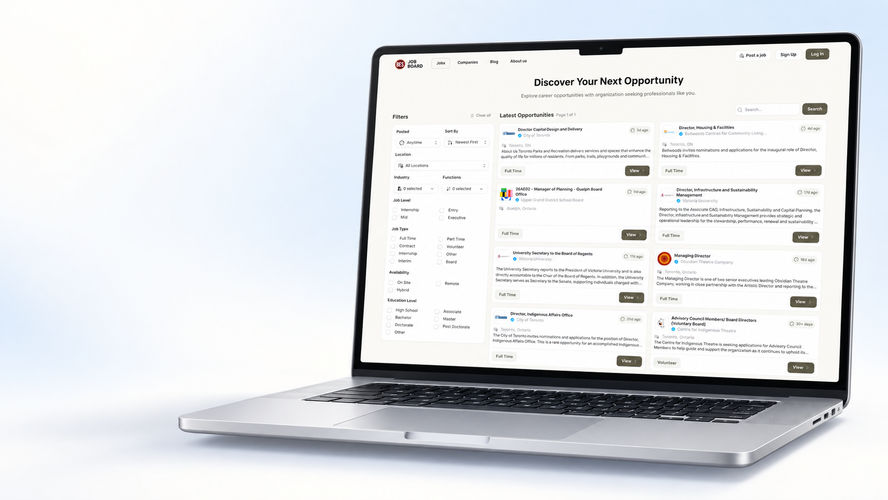
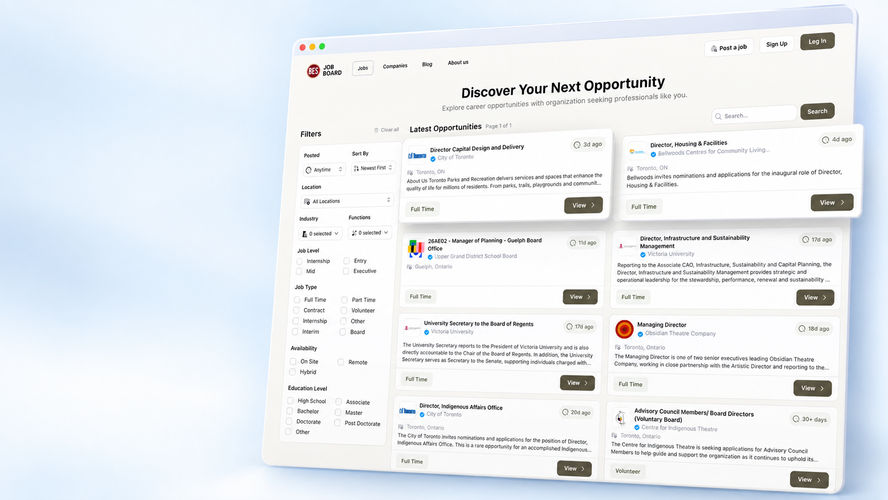
Most employers ask what a job posting costs as if there were one price. There isn't. Job posting costs in Canada depend on how the job board charges, and every board uses one of three models: a free listing with limited reach, a flat fee for a fixed period, or a pay-per-click budget that keeps billing until someone turns it off. The honest comparison isn't one site against another; it's a known cost against an open-ended one, and this guide shows you how to price both before you spend a dollar.
Want to know your cost before you post? A single 30-day posting on the BES Job Board is $250 CAD, one time, with a free account and an AI-assisted job writer built in. No bidding, no daily budget. Post your job →
Job posting costs in Canada at a glance
Flat-fee boards, most of them niche or sector boards, charge a set price you can see before you buy; the ones in this guide charge between $56 and $398 for a single posting. Free boards cost nothing but limit your reach or your applicants. Pay-per-click boards bill for results against a budget you set, at a rate their own systems decide for each job. Here is how the three models compare in September 2026.
Pricing model | Examples | What you pay | How long it runs | Best for |
|---|---|---|---|---|
Flat fee | BES Job Board, CharityVillage, Work in Culture, TorontoJobs.ca, Knighthunter | $56 to $398 per posting, shown before you buy | 30 to 60 days, then it ends | Senior, sector and regional roles where alignment matters more than volume |
Free | Job Bank, ONN's Connect Nonprofit Jobs for members, free tiers on Indeed and LinkedIn | Nothing, with limits on reach or applicants | Varies; a free LinkedIn job pauses after 14 days | A baseline alongside a paid posting |
Pay-per-click | Sponsored jobs on Indeed, promoted jobs on LinkedIn | A daily or total budget, at a rate set for each job | Until you stop the budget | Volume and frontline roles drawn from a large pool |
Several boards also sell multi-posting packs or yearly contracts, which suit employers who hire every month. The rest of this guide explains each model, then gives you a break-even test and five questions to ask before you pay anyone.
What flat-fee job boards cost in Canada
Flat-fee boards charge a price you can see before you sign up, and the posting stays up for a fixed period whether it draws five applicants or five hundred. Most are niche, sector or regional boards, so the trade is predictable cost and a narrower, more relevant readership in exchange for less raw reach. The fee also caps your risk: the worst case is known on the day you buy.
BES Job Board: A single 30-day posting on the BES Job Board is $250 CAD, bought once through Stripe, with no subscription. The account is free, the AI job writer is included, and you can edit the posting after it goes live. BES offers discounts on multiple postings through [email protected].
CharityVillage: The national nonprofit board lists single postings at $298 for nonprofits and charities and $398 for for-profit employers, with up to 60 days online and discounts on multi-posting packs.
Work in Culture: The Ontario arts, culture and heritage board charges $180 plus HST for a paid position, up to 60 days, plus $15 plus HST per day if you want the posting featured.
TorontoJobs.ca: The Greater Toronto Area board charges $149 for a single 30-day posting, dropping to $99 each when you buy in volume, and sells a yearly unlimited subscription from $1,295.
Knighthunter: The London and southwestern Ontario board's employer services start at $56 for a six-week posting, the lowest paid rate in this guide.
The limits deserve the same candour as the prices. The BES Job Board is a small board run by BES Executive Search Inc., a Toronto executive search and EDIA (Equity, Diversity, Inclusion, and Accessibility) firm. Its listings skew senior and mid-level, and most are in Toronto and Ontario, across nonprofit, public sector and arts and culture organizations. It is the wrong tool for hiring twenty warehouse associates by Friday.
Hiring for a nonprofit, charity or public organization? Reach mission-driven professionals at a price you can put in the budget before you post. A single 30-day posting on the BES Job Board is $250 CAD. Post your job →
Free job boards: what you get and what you give up
Free posting is real in Canada, and for some roles it is enough. What you give up is reach, control or both, so treat a free listing as a baseline, not a plan.
Job Bank: The federal government's board lets you advertise for free. You need your Canada Revenue Agency payroll account number, and your employer file is reviewed before postings show as verified.
Member boards: The Ontario Nonprofit Network's Connect Nonprofit Jobs is free all year for ONN members that are not-for-profit or charitable organizations. If you already belong to a sector network, check what it offers before you pay anyone.
Free tiers on the large general boards: Indeed allows up to three free jobs a calendar month, but free posts fall back in search results as newer jobs arrive. LinkedIn allows one free job at a time, paused after 14 days and hidden from search once it reaches a free applicant limit that LinkedIn says typically ranges from 10 to 30.
For example, a small charity hiring a part-time bookkeeper may fill the role from Job Bank and its sector network alone. The same charity hiring an executive director shouldn't rely on a listing that pauses in two weeks or sinks below newer jobs in a few days.
How pay-per-click job boards bill
Pay-per-click boards don't sell a posting at a set price; they sell traffic against a budget you set. Indeed and LinkedIn, the two largest general boards in Canada, both work this way, and neither publishes a Canadian rate card.
On Indeed, there is no flat upfront fee. A sponsored job is billed per click or per started application, on a daily or monthly budget that Indeed suggests from the job title, location and description, and new Canadian accounts receive a $100 CAD credit toward their first sponsored job. On LinkedIn, pricing varies with the role, the location and the number of hires, and a promoted job is billed per click against a daily average or total budget. Employers who hire constantly can also buy LinkedIn Job Slots on contract.
What this means in practice: nobody can tell you in advance what a sponsored posting will cost for a director of finance in Toronto, because the board sets the rate when you build the job. The per-click figures quoted online are mostly American and mostly estimates. Treat them as a guess about someone else's market, and treat the budget you set as the only price you will know.

Pay-per-click or flat fee: the break-even test
A flat fee wins when the pay-per-click budget you would need for the same period is higher than the fee. For a $250 CAD, 30-day posting, the break-even is a daily budget of about $8.33. Any sponsorship you run at more than that for a full month costs more than the flat posting.
That arithmetic doesn't settle the question on its own, because the two models buy different things. Pay-per-click buys traffic: the more you spend, the more people see and click. A flat fee buys placement in front of a particular readership for a fixed time. So run the test in two steps.
Estimate the full-period spend: Take the daily budget a pay-per-click board suggests when you build the job, multiply it by the number of days you expect to keep the role open, and add a week, because searches run long.
Compare it with the flat option, then ask what each buys: If the sponsored spend is lower and your role draws from a large general pool, sponsor it. If the flat fee is lower, or the people you need don't browse general boards, the flat posting is the better value even before you count screening time.
For example, a community health centre hiring three intake workers in Scarborough needs reach, and a sponsored job on a general board is the right tool; a few hundred applicants is the goal. The same centre hiring a director of programs needs twelve good applicants, not three hundred. At that level, every extra click is a résumé someone on staff has to read and a candidate who deserves a reply.
How to price a job posting before you pay: five questions
Price is only the visible part of the bill. The real cost of a job posting includes the budget you forgot to cap, the hours spent screening the wrong pool, and the cost of starting again. These five questions will surface all three before you commit.
1. Who is already reading this board?
Look at the last twenty jobs posted in your field and region. If none of them resemble your role, your candidates are not reading that board either. A cheap posting in front of the wrong audience is the most expensive option you have.
2. What exactly triggers the charge?
Know whether you are paying for a view, a click, a started application or a fixed period. Per-click billing charges you for curiosity; per-application billing charges you for people who may never finish. Neither is wrong, but you should know which one you have agreed to.
3. When does it stop?
A flat posting ends on a date. A sponsored budget ends when you close it, and a promoted job on a daily budget can run for up to six months. Put a calendar reminder on the day you intend to stop, and name the person responsible for stopping it.
4. What does the free version lose?
Free postings are real, but most are designed to be outgrown. On the large general boards, free posts slide down the results or pause within weeks, and member boards reach only their members. If the role matters, plan to pay for visibility somewhere.
5. What does it cost if the pool is wrong?
For senior roles, this is the question that decides it. A posting that fills the inbox with applicants who can't do the job costs your team days of screening, and a rushed hire from a thin pool costs far more than any posting fee. In the searches we run at BES, committees that start with a narrow, relevant pool make faster, better decisions than committees wading through volume, because they spend their time on judgment instead of sorting. That is also a question of inclusion: a pool drawn only from the loudest channels tends to reproduce the last short list, and a homogeneous short list misses signals the organization needs.
Before you pay, ask yourself: who would I most like to apply for this role, and where are they actually looking?
What Ontario employers must include, whichever board they use
The price of the board is only half of what's changed in 2026. Since January 1, 2026, Ontario employers with 25 or more employees have had to meet new rules for publicly advertised job postings under the Employment Standards Act, and those rules apply on every job board, free or paid. According to the Ontario government's guide to job postings:
State the compensation: Include the expected pay or a range no wider than $50,000 a year; roles paying more than $200,000 are exempt.
Disclose AI screening: If artificial intelligence screens, assesses or selects applicants, say so in the posting.
Say whether the vacancy exists: The posting must state whether it is for an existing vacancy.
Drop Canadian experience requirements: They can't appear in the posting or the application form.
Answer interviewed candidates: Tell anyone you interviewed about the decision within 45 days of their last interview, and keep posting records for three years.
The 45-day rule has a cost side worth noting. A board that sends you three hundred applicants doesn't change the rule, but it does change how many interviews you may end up running and tracking. Every applicant deserves a response anyway; it's how candidates decide whether to apply to you next time, which is why we wrote about what employers must know once the decision is made.
Frequently Asked Questions
How much does it cost to post a job in Canada?
It depends on how the job board charges. Job Bank is free. Flat-fee boards charge a fixed price for a set period: in September 2026, from $56 for a six-week posting on Knighthunter to $398 for a for-profit employer on CharityVillage, with the BES Job Board at $250 CAD for 30 days. Pay-per-click boards such as Indeed and LinkedIn have no set price; you pay the daily or total budget you choose, at a rate set for each job.
What is a flat-fee job board?
A flat-fee job board charges one price per posting, shown before you buy, and keeps the posting up for a fixed period, usually 30 to 60 days, however many people click or apply. Most niche, sector and regional boards in Canada work this way. The cost is known in advance, and the readership is narrower than on a general board.
Are niche job boards worth paying for?
For specialized and senior roles, usually yes, because the people you want read the boards in their own field. A niche posting that brings twelve qualified applicants costs less in screening time than a general one that brings three hundred. For volume hiring, a general board's reach is worth more than a niche board's fit.
How much do Indeed and LinkedIn charge to post a job in Canada?
Both offer a limited free option: up to three free jobs a month on Indeed, and one free job at a time on LinkedIn, paused after 14 days. Beyond that, both bill against a budget you set, per click or, on Indeed, per started application, at a rate calculated for each job. Neither publishes a Canadian rate card. New Canadian Indeed accounts get a $100 CAD credit.
What is the cheapest way to post a job in Canada?
Job Bank, run by the Government of Canada, is free for registered employers, and the large general boards each offer a limited free posting. Among paid options, flat-fee boards give you a known cost: Knighthunter starts at $56 in southwestern Ontario, Work in Culture charges $180 plus HST and the BES Job Board charges $250 CAD for 30 days. The cheapest posting is the one that reaches the right people the first time.
The real cost of a job posting is the pool it gives you
Job posting costs in Canada are easy to compare once you know how each job board bills: a free listing, a pay-per-click budget or a flat fee. What's harder to price is the pool. A posting that reaches the right twelve people is cheap at almost any price, and one that reaches three hundred of the wrong ones is expensive even when it's free. Set a ceiling, choose the board whose readers look like your short list, and revisit the choice every time you hire, because the right channel for a coordinator is rarely the right channel for a director. If the role is senior enough that a wrong hire would cost you years, a retained executive search may be a better investment than any posting.
Need more than a job posting? Post your role on the BES Job Board today, or book a free 15-minute call to talk through executive search and recruitment support with the BES team. Post a job → · Book a 15-minute consult

Erica Ing is Vice-President, Operations at BES Executive Search, the Toronto executive search and EDIA consulting firm. She keeps clients, candidates and the BES search team working in step, and oversees the operations and delivery that keep each search on track. Before BES, Erica worked at both a boutique and an international executive search firm. There she provided operational, client service and delivery support on searches in real estate, the public sector, academia, and leadership coaching and assessment. She holds a Bachelor of Commerce from Ryerson University.